Ready Reckoner Rate 2026: Ultimate Guide for Buyers & Investors
Buying a home or investing in property is one of the biggest financial decisions you will ever make. And right at the heart of that decision lies a number many first-timers overlook: the Ready Reckoner Rate. This one government-notified figure can quietly add lakhs to your total purchase cost.
Whether you are a first-time homebuyer in Mumbai, an NRI investor eyeing Pune's booming IT corridors, or a family looking to settle in Navi Mumbai, understanding the Ready Reckoner Rate is no longer optional—it is the foundation of a smart property decision.
At RealEstate Talk, India's first social networking platform built exclusively for the property industry, we believe that knowledge shared within a trusted community is the key to making confident real estate choices. Think of us as LinkedIn for the property world—a space where buyers, sellers, agents, architects, mortgage advisors, and even Vaastu consultants come together to connect, learn, and grow.
Ready to decode the Ready Reckoner Rate together? Let's dive in.
What is the Ready Reckoner Rate (RRR)? A Simple Guide for Homebuyers
When you buy a property, two prices are always in play—the price you agree upon with the seller, and the minimum price the government has set for that locality. That government-set price is the Ready Reckoner Rate, or RRR for short. In simple words, it is the least value at which a property can be legally registered in India.
Depending on which state you are in, you may hear this called by different names. In Maharashtra, it is the Ready Reckoner Rate. In Delhi, UP, and Haryana, people call it the Circle Rate. Head down south to Karnataka or Tamil Nadu, and it is the Guidance Value. In Gujarat, it goes by Jantri. Whatever the local name, the purpose remains the same: to stop property undervaluation, curb black money, and ensure the government collects the right stamp duty and registration charges.
Why do governments set this rate?
The government reviews and updates these rates—usually at the start of every financial year—based on factors like location, property type, market demand, nearby infrastructure, and overall economic conditions. Think of it as the government's way of saying, "This is the least a property in this area should be worth."
Why Does the Ready Reckoner Rate Matter for Your Property Purchase?
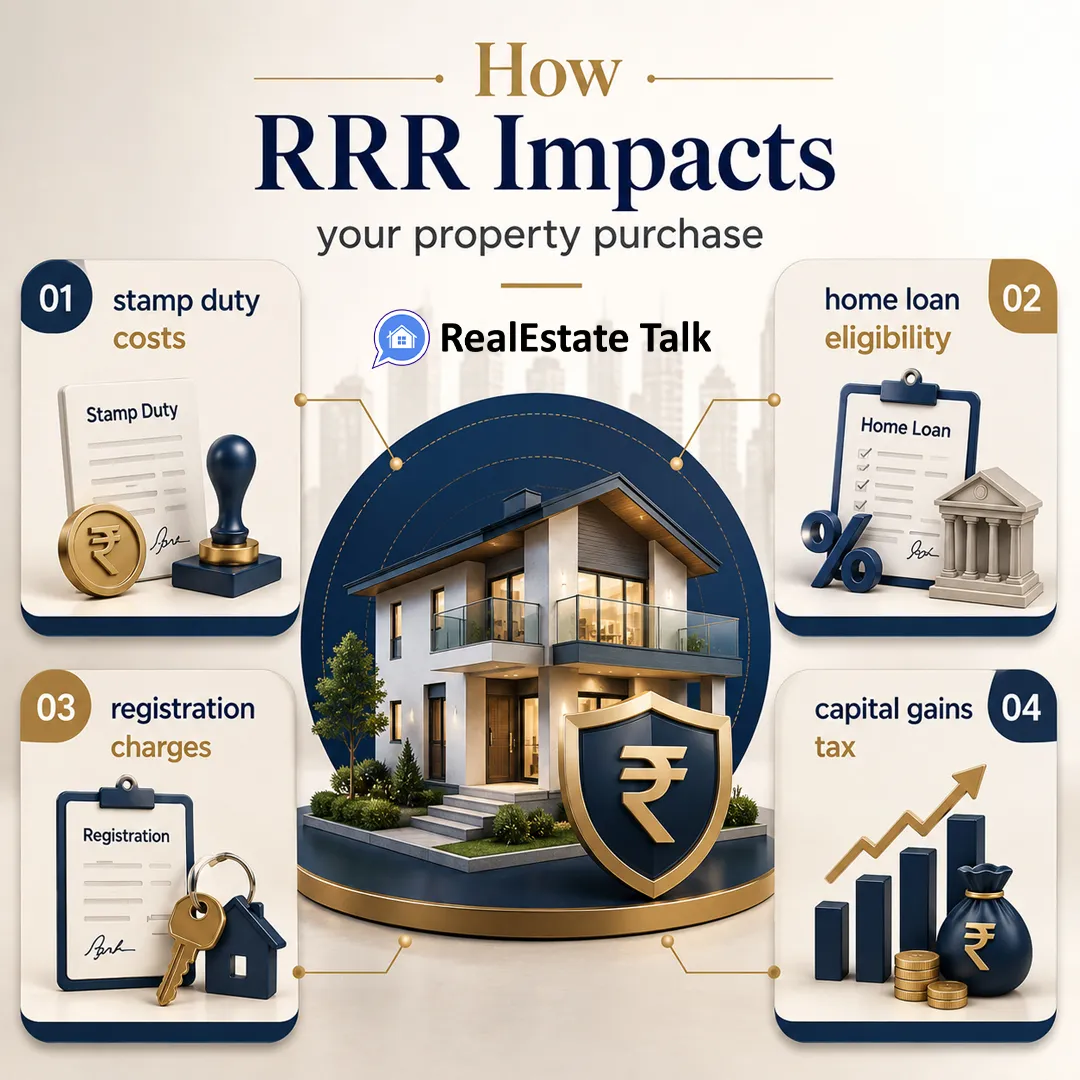
You might wonder, "It's just a government rate, why should I lose sleep over it?" The answer lies in how deeply this one number affects nearly every rupee you spend on a property transaction. It directly determines your stamp duty, influences your home loan eligibility, and even decides how much tax a seller pays.
At RealEstate Talk, our community members frequently discuss how understanding the RRR early helped them negotiate better and avoid last-minute financial shocks. Whether you prefer to deal directly with owners or work through a trusted estate agent—our platform supports both paths, respecting the choices of every buyer and seller.
Direct Impact on Stamp Duty and Registration Costs
This is the most immediate and visible impact. The rule is simple: your stamp duty and registration charges are calculated on the higher of the two values—the Ready Reckoner Rate or your actual transaction value.
Let that sink in. Even if you negotiate a fantastic deal with the seller, if the government's RRR is higher, your stamp duty will be paid on that higher amount. For a buyer in Maharashtra, where stamp duty can range from 5% to 7% of the property value, even a small difference between the transaction price and the RRR can mean tens of thousands of rupees in extra costs.
How RRR Affects Your Home Loan Eligibility
When you approach a bank for a home loan, they don't just look at your salary slip. They assess the property's market value to decide the Loan-to-Value (LTV) ratio—essentially, how much they are willing to lend you as a percentage of the property's worth. While banks primarily rely on market value, the RRR acts as a floor. If the transaction value is significantly lower than the RRR, the bank may peg your loan eligibility to the lower transaction value, reducing the maximum loan amount you can get and increasing your required down payment.
RRR and Capital Gains Tax: What Sellers Need to Know
If you are on the selling side, pay close attention. Under Section 50C of the Income Tax Act, if you sell a property for a price that is lower than the Ready Reckoner Rate, the Income Tax Department will treat the RRR-based stamp duty value as your "sale price" for the purpose of calculating capital gains tax.
This means you could end up paying tax on an income you never actually earned. The only relief? A 10% tolerance band—if the difference between your sale price and the RRR is within 10%, the actual sale consideration is accepted. Beyond that, you may face a hefty tax bill.
Planning to buy a property?
Calculate your home loan EMI and affordable property budget

Comments
Post a Comment